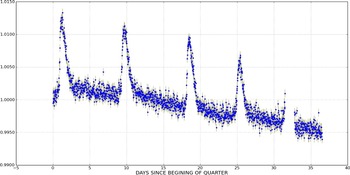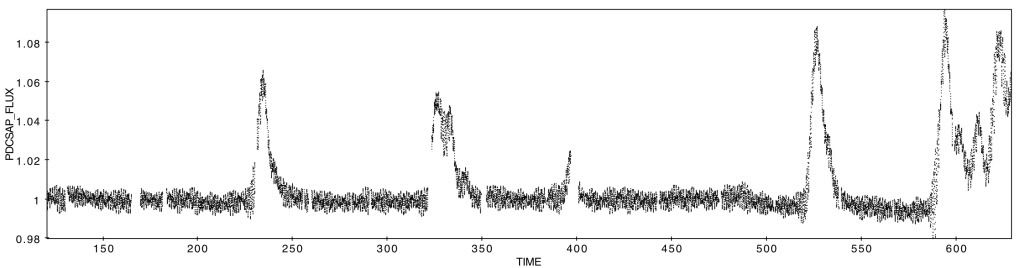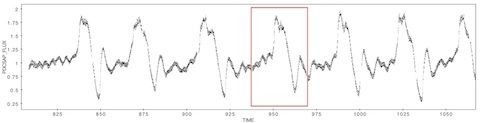
Forum Talk member Penn_gwenn flagged this star in Kepler Q2. It immediately attracted interest from forum members, Zoo3hans, Kian Jek, Nighthawk_black, Cappella and others as a possible Dwarf nova or Heartbeat binary. You can see superhump-like features in the time plot above. KIC 9406652 is currently being investigated by the Kepler Guest Observer program for further analysis. No one quite knows what exactly this star is.
Kian Jek
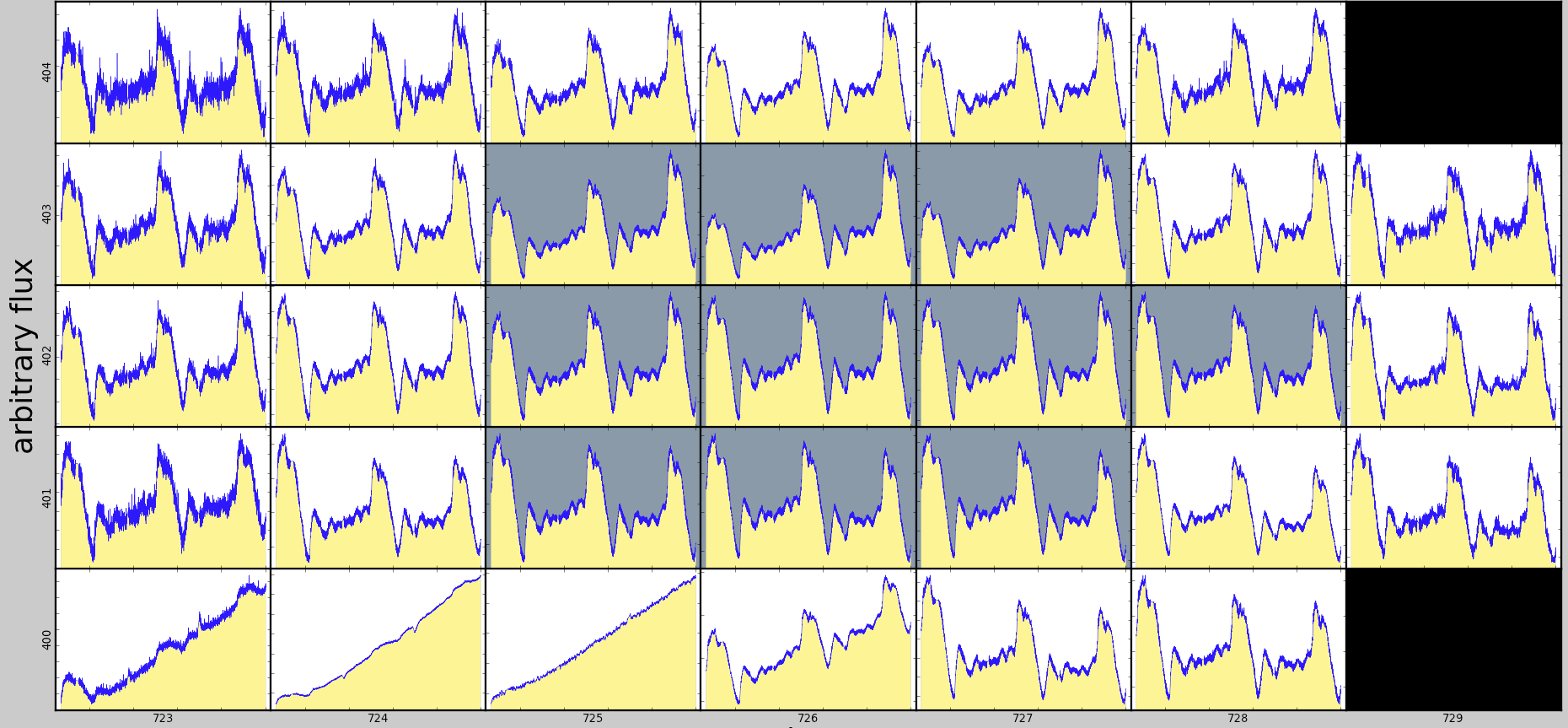
I believe this might be genuine. There are APOs of around 20-30 millipixels in the source FITS file, but the brightening points in the direction of the target. And there is no apparent source in that direction. The APOs represents the flux shifting away from the brighter neighbor IMO:

I suspect this could be an SS Cygni type of dwarf nova, from the shape and frequency of the outbursts - they are more frequent and do not exhibit the super-outbursting behavior of the SU UMa types we've seen previously. There are superhumps noted during the descending limbs of an outburst, sometimes stretching into the quiescent periods, with a period of approximately 6 hours. I'll do a little more poking around.
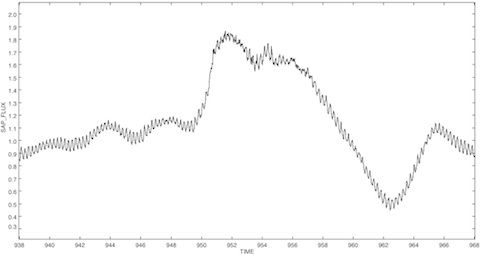
The region from which I took the sample to find the superhump period is here:
and here's where it comes from, in Q10:

Backing up a bit, here's the entire light curve:

What just occurred to me is that the lowest flux levels seen here are true minimas - they are not due to data gap problems - the flux level of ~0.5 seems to be the actual base flux level, and therefore this DN seems to spend a lot of its time at about 2x its lowest brightness. This type of behavior is perhaps more accurately described as a UGZ or a Z Camelopardalis type of dwarf novae rather than a UGSS (or SS Cygni type).

Caveat: I am not a real astrophysicist. EIKAAILOW™ (Everything I Know About Astrophysics I Learned On Wikipedia).
This is interesting because IIRC we have already found 2 examples of UGSU and 1 UGSS (although they are background DNs) and this one, which seems like a real target, is a UGZ, and thus completes all the major types of dwarf novae discovered by citizen scientists in the Kepler FOV.
Daryll LaCourse (Nighthawk_black):
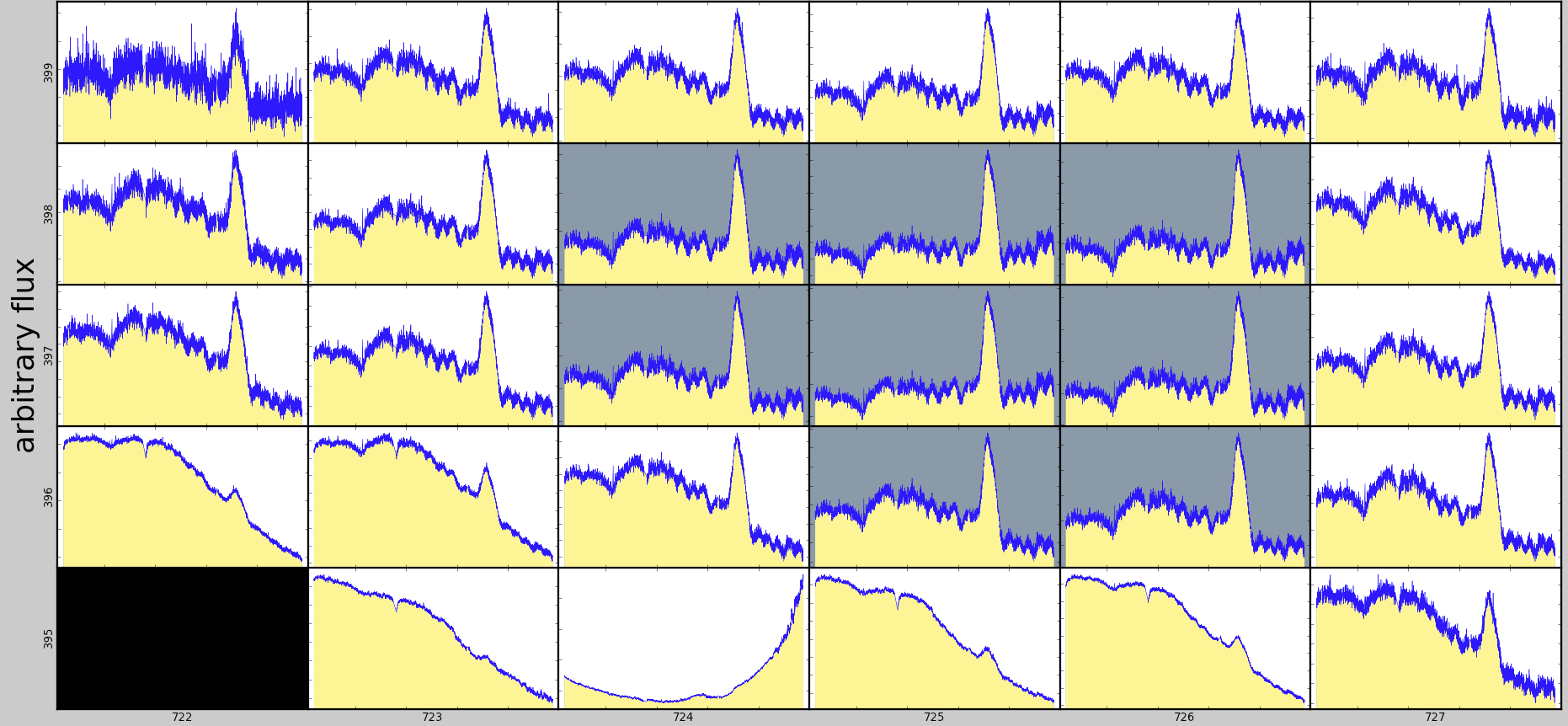
Keppixseries from the target pixel files support this interpretation; the outbursts flood the optimal aperture and to a lesser extent the surrounding halo pixels:
Q5:
FULL
Q10:
FULL


You can follow this star on Planet Hunters forum Talk here.